HVAC Speed to Lead: Winning the Emergency Call and the Planned Quote
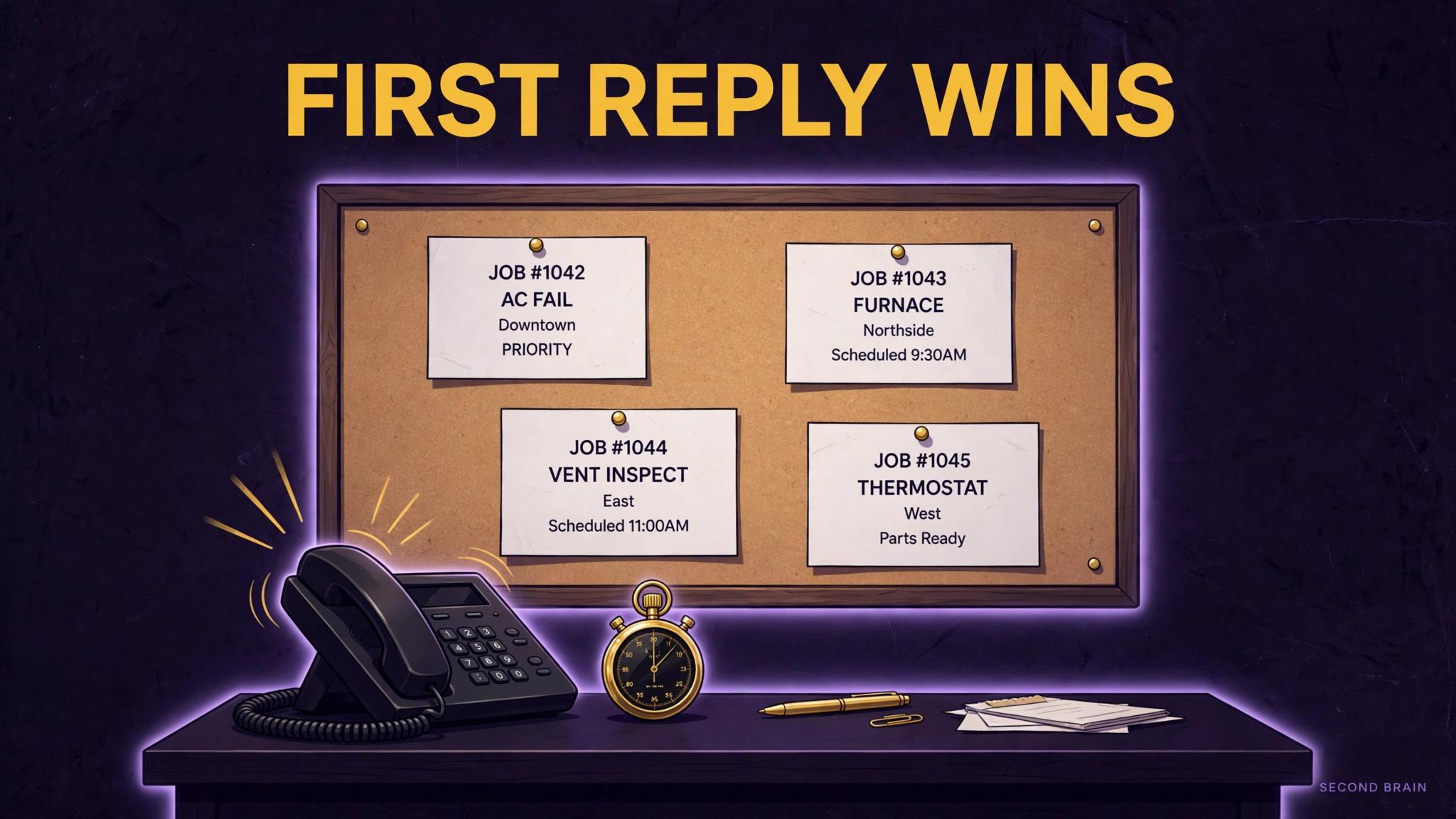
TL;DR: Split HVAC speed to lead into two lanes: emergency and breakdown enquiries, which need the fastest possible human response and a clear statement of what happens next, and planned quote enquiries, which need a prompt, structured reply that books an assessment. Give both lanes an instant acknowledgement, a named owner, and a finite follow up. In surge periods, protect the emergency lane first, set honest expectations on the rest, and measure your own response times instead of chasing benchmark claims.
Key Takeaways
- One response process for all HVAC leads serves neither kind well. Emergencies decay in minutes of customer patience, planned quotes decay over a shortlist.
- The first reply must match the lane: dispatch clarity for emergencies, assessment booking for planned work.
- Surge is the real test. Heatwaves and cold snaps are when systems built on individual effort collapse.
- Honest expectations beat optimistic ones. A true wait communicated early retains more goodwill than a fast promise that slips.
- The phone safety net underneath both lanes is covered in our HVAC missed call text back guide.
What does speed to lead mean in HVAC?
It means the elapsed time between an enquiry arriving and a real response that moves the customer forward, and in HVAC that definition splits immediately. A homeowner with no heating in winter or no cooling in a heatwave is not comparison shopping in the usual sense. They are looking for the first competent company that answers, confirms they are heard, and tells them what happens next. A homeowner planning a system replacement, by contrast, is building a shortlist over days, and your speed competes with the quality and clarity of your quote process.
Both lanes punish slow response, just on different clocks. No conversion statistic is claimed in this guide, because published figures vary by source, lead type, and market, and none of them will tell you how your own operation performs. Measure your own baseline: sample recent enquiries in each lane, record the time to first real reply, and record how many were never answered at all. That last number is the one that usually changes behaviour. The estimate side of the planned lane is developed further in our HVAC estimate follow up guide.
The emergency lane
The emergency lane needs three things. First, an acknowledgement that is instant on digital channels and honest about the current situation. During a surge, a message that confirms receipt, states that the team is working through emergency calls in order, and gives a realistic callback window can hold a customer that silence would lose.
Second, a triage reply, not just a fast reply. The first human contact should establish the basics that dispatch needs: the system state, any safety relevant detail such as a burning smell or a vulnerable person in the home, and the address area. Teach the team to route genuine safety concerns to the appropriate emergency guidance immediately, rather than into a sales queue. Speed in this lane is a service quality, not a closing technique.
Third, expectation discipline. If the honest answer is that a visit today is unlikely, say so early and offer the real alternatives your company can deliver. Customers remember being told the truth during a stressful day. They also remember being strung along, and they say so in reviews, which is one reason this lane connects directly to your HVAC review request system and your reply discipline.
The planned quote lane
Planned work, replacements, second opinions, and maintenance enquiries, rewards a structured promptness. The first reply should confirm what the customer is considering, ask the small number of questions that make an assessment visit useful, and offer real booking options. A fast reply that only says thanks, we will be in touch, wastes its speed. The customer cannot act on it, so they continue building their shortlist.
Follow up in this lane is a sequence, not a chase. An unanswered quote enquiry gets a small number of helpful touches, each adding something: a reminder of the booking step, an answer to a common question, a note about what an assessment covers. Then close the loop politely. The follow up logic matches the estimate follow up system linked above: persistence with a limit, recorded honestly either way.
Surge rules, ownership, and measurement
Surge periods need rules written in advance, in a calm week, because nobody designs a good system mid heatwave. Decide the order of protection: emergencies first, vulnerable customers as your policy defines them, booked work protected, planned quotes acknowledged with honest timelines rather than ignored. Decide who owns each queue per shift. Decide what the acknowledgement messages say when waits are long, and approve that wording before you need it.
Ownership is the quiet difference between companies that answer and companies that intend to answer. One named owner per lane per shift, a visible unanswered queue, and a short end of day sweep so nothing sleeps unanswered without a deliberate decision. If the sweep keeps finding the same failure, the fix is structural: routing, staffing shape, or the acknowledgement system, not exhortation.
Measure weekly in season: time to first real reply by lane, percentage of enquiries with no reply, and follow ups completed as designed. Compare against your own previous weeks, not against vendor benchmarks. Pair the system with your maintenance base, covered in our HVAC maintenance plan revenue guide, because plan customers should never be discovering your response times during a breakdown. They should already know how you answer.
Second Brain helps HVAC companies build this as one operating system: lane design, surge rules, ownership, and the reporting that shows whether response times hold when the weather turns. If your lead handling feels fine in mild weeks and chaotic in extreme ones, the system, not the team, is the gap.
FAQ
How fast should an HVAC company respond to an emergency enquiry?
As fast as the operation can do reliably, with instant acknowledgement on digital channels and a human triage reply as the first priority in the queue. Measure your current times first, then set a standard the roster can actually keep during surge.
Should planned quotes get the same priority as breakdowns?
No. They get a different lane with a structured, prompt reply and a booking step. Protecting the emergency lane during surge while still acknowledging planned work honestly is exactly what the two lane design is for.
What should an acknowledgement say when waits are long?
The truth, briefly: that demand is high, where the enquiry sits, when a person will reply, and what to do if the situation becomes unsafe or urgent. Honest wording approved in advance beats improvised optimism.
How many follow ups should a quote enquiry get?
A small, finite number, each adding something useful, then a polite closure. Record the outcome so the next season starts with honest data about where quotes are won and lost.
Sources
- Keyword basis: queue candidate "hvac speed to lead" in .saeo/keywords.yaml, added and drafted 2026-10-30. No volume or difficulty figure is claimed in this post.
- Internal link targets: hvac-missed-call-text-back, hvac-estimate-follow-up, hvac-review-request-system, hvac-maintenance-plan-revenue (live, staged, or drafted in this same program, checked 2026-10-30).
- No statistics, response rates, conversion rates, or ranking effects are asserted in this post. Timing standards described are operational choices for a company to set and measure itself.