Roof Maintenance Software: Running Inspection Programs Without a Spreadsheet Season
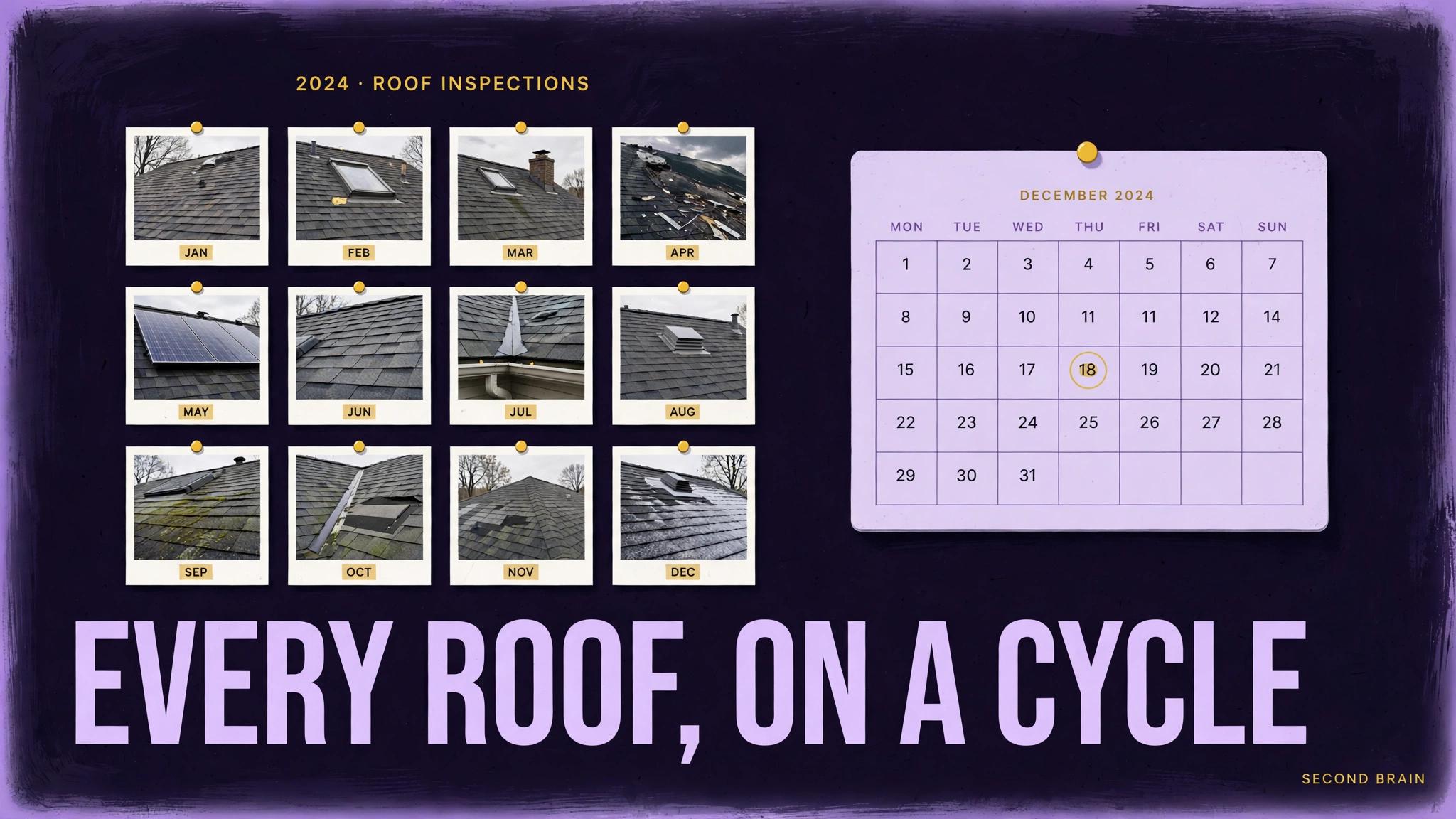
TL;DR: Roof maintenance software supports a program, not a job: a record per roof asset, inspection cycles that trigger themselves, photo and condition history across years, work recommendations tracked from finding to fix, and renewals that arrive before the agreement lapses. Judged as job software it looks underpowered; judged as program software, a spreadsheet is the tool that starts to fail as the history builds.
Key Takeaways
- Roof maintenance software supports a program, not a job: a record per roof asset, inspection cycles that trigger themselves, photo and condition history across years, work recommendations tracked from finding to fix, and renewals that arrive before the agreement lapses.
- Start with the failure pattern you can verify in your own records: Roof history scattered: Inspections in one folder, repairs in invoices, photos on phones, with no single asset record a new technician can read.
- Work in sequence: Create one asset record per roof: install details, materials, access notes, warranty terms, and full service history. Then: Set inspection cycles per agreement with automatic upcoming work lists, reviewed monthly.
- Judge the result with your own numbers: Every agreement has an asset record with complete history, sampled quarterly for gaps.
Maintenance programs are how roofing companies smooth seasonal revenue and stay attached to commercial and premium residential roofs for years. Our HVAC maintenance plan piece covers the revenue logic in a sister trade. The software question here is specific: programs live on history and rhythm, and tools built for one off jobs handle neither. This guide sets the requirements from the program's second year backwards, because year one works in any tool, including a drawer.
How is a maintenance program different from repair work, for software?
The order matters here. These problems tend to arrive together, but they do not cost the same, and fixing the visible one first usually means fixing it twice.
- Roof history scattered. Inspections in one folder, repairs in invoices, photos on phones, with no single asset record a new technician can read.
- Cycles kept by memory. Annual or seasonal inspections due by date arithmetic a person must remember across dozens of roofs.
- Findings without follow through. A recommended repair noted on an inspection vanishes instead of becoming a tracked, priced proposal.
- Renewals arriving as surprises. Agreements lapse silently and the relationship, and its revenue, wanders to whoever calls next.
What records does each roof asset need?
- Create one asset record per roof: install details, materials, access notes, warranty terms, and full service history.
- Set inspection cycles per agreement with automatic upcoming work lists, reviewed monthly.
- Standardize inspection capture: defined photo set and condition notes, comparable year over year.
- Convert findings into tracked recommendations with prices and customer decisions recorded on the asset.
- Run renewal notices ahead of lapse dates, with the roof's history summary attached as the reason to stay.
If you are already part way down this list, start from the first step you cannot honestly check off. Systems fail at their earliest missing step more often than at their latest one, and repairs made downstream of a gap rarely hold.
How should inspection cycles and findings be handled?
Illustrative example only: a program with 40 roofs on annual cycles owes about 3 to 4 inspections a month, a rhythm one coordinator can run from a proper upcoming work list, and a chaos of calendar archaeology from a spreadsheet by year two. The figures are illustrative; count your agreements and their cycles to size your own rhythm.
The mistakes that most often undo this work:
- Running the program inside job software that cannot think in assets and anniversaries, then blaming the program's economics.
- Selling agreements faster than inspection capacity, which converts a trust product into a backlog of broken promises.
- Reporting activity instead of condition. Customers renew on evidence their roof is known and watched, not on visit counts.
How do renewals and reporting keep the program sold?
You know this is working when you can check the following against your own records, without asking anyone to prepare a report:
- Every agreement has an asset record with complete history, sampled quarterly for gaps.
- Upcoming inspections list reviewed monthly, with nothing overdue unexplained.
- Recommendations tracked from finding to decision on every inspection, no orphan findings.
Related reading from this program: HVAC maintenance plan revenue, best CRM for roofing companies, reputation management for roofing companies.
Second Brain builds and runs systems like these for service businesses, and the engagement always starts the same way: find where the work is actually being lost, in what order, and what evidence would prove a fix worked. If this guide's diagnosis matches your operation, that audit is the honest next step. If it does not match, you have saved yourself a purchase, which is also a good outcome.
FAQ
Is maintenance software different from our job platform?
It can be a module or a dedicated tool, but the functions are distinct: assets, cycles, and longitudinal history rather than jobs and stages. Test any platform on the second year scenario, dozens of roofs with layered history, not on the first inspection.
What customers fit maintenance programs?
Commercial owners and managers first, and premium residential owners who value records, especially after a new install. The software requirements in this guide assume that program shape.
How do photos matter across years?
Comparison is the product. A condition photo set that matches last year's proves change or stability, supports recommendations, and settles warranty and responsibility questions with evidence instead of recollection.
When is a spreadsheet honestly enough?
In year one, with a handful of agreements and one disciplined owner. The honest trigger to move is when history questions take hunting, or a cycle is missed. By then the records need a home built for them.
Sources
- Keyword basis: mined queue (SE Ranking, pulled 2026-10-23, US, desktop) entry "roof maintenance software", ESTIMATED volume 10, ESTIMATED difficulty 40, intent informational. Mined figures are estimates, unvalidated against our own GSC and PostHog data, and no mined figure is claimed as a result in this post.
- Internal link targets: hvac-maintenance-plan-revenue, roofing-crm-comparison, reputation-management-for-roofing-companies (live, staged, or drafted in this same program, checked 2026-10-23).
- No external statistics, market prices, or client claims are made in this post. Worked figures are labelled illustrative in the text, and guidance is stated as general practice from implementation and operations work.