Storm Chasing vs Local Roofing Marketing: Two Different Businesses
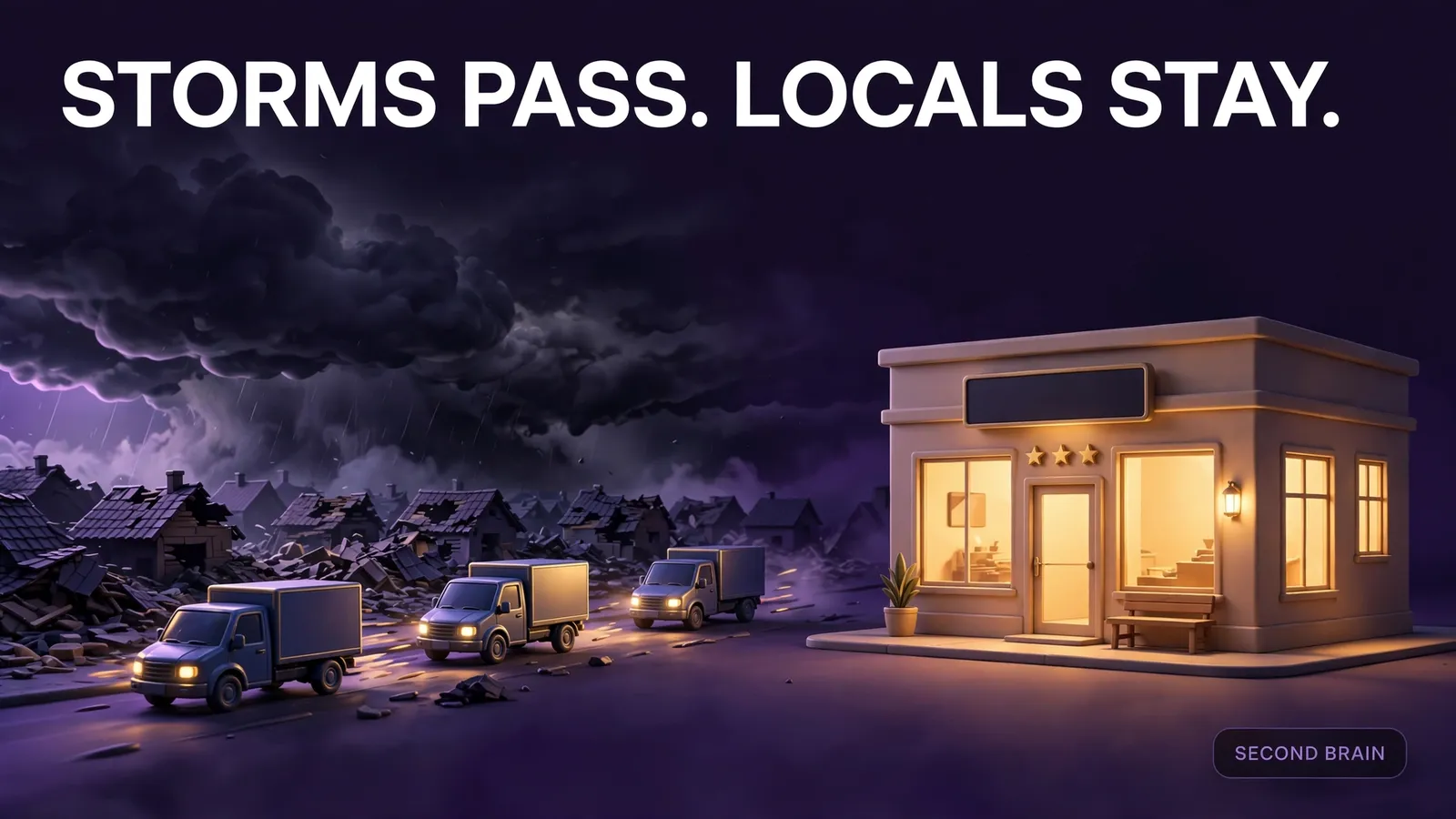
TL;DR: Storm chasing and local roofing marketing are different businesses wearing the same trade name. Storm work rewards mobility, fast setup in a new market, and door-to-door presence while damage is fresh. Local work rewards a complete Google Business Profile, a deep review record, and referral systems built over years. Pick the model your assets actually support, or run both with separate systems, because a blended half-version of each tends to fail at both.
Key Takeaways
- Storm revenue is intense and temporary. Local revenue is steadier and compounds.
- Storm marketing is presence marketing: crews, signage, canvassing, and speed in a market where nobody knows your name.
- Local marketing is reputation marketing: reviews, referrals, and search presence in a market where your name is the asset.
- The follow-up discipline is shared. Both models lose money when enquiries sit unanswered.
- Reputation risk runs in opposite directions. A storm operator can leave a market. A local company lives with every review forever.
How does storm chasing actually make money?
A storm creates concentrated damage in a defined area for a defined window. Homeowners need inspections, documentation, and repairs quickly, and many have never chosen a roofer before. The companies that win are present early, visible locally, and fluent in the insurance process the homeowner is navigating for the first time.
The marketing is therefore physical and fast: local phone presence, yard signage where permitted, door-to-door inspection offers conducted within local rules, and paid ads targeted tightly to the affected area. Our comparison of roofing SEO vs Google Ads explains why storm demand is a paid problem: the window is too short for organic work to arrive in time.
The costs are just as real. Travel, lodging, licensing and registration requirements that vary by jurisdiction, unfamiliar subcontractors, and warranty obligations that remain after the crews leave. A company that cannot service what it sells from a distance should count that obligation before it counts the revenue.
How does local marketing compound instead?
The local model builds the assets a storm operator cannot buy quickly. A complete profile, covered in our guide to Google Business Profile for roofers, a review record built job by job, referral relationships, and service pages for the towns served. Roofing Contractor's 2026 homeowner survey with Owens Corning, cited in our speed-to-lead playbook, found 74 percent of homeowners follow a recommendation from a neighbour, friend, or family member. That is the local moat described in one line: the recommendation network exists before the search does.
Local marketing looks slow because its returns arrive over quarters. Its defence is that a competitor entering your town starts years behind your review record and referral base, the same way you would start behind in theirs.
Can a company do both?
Yes, with separate systems and honest accounting. The local operation needs its profile, reviews, and follow-up running without the owner present, or storm season will hollow it out. The storm operation needs its own lead handling, its own service commitments, and a clear rule for how warranty and callback work gets done after the push ends. Track cost per signed job separately for each model, using the method in our roofing lead cost guide.
What does not work is drift: a local company that quietly spends its spring chasing distant storms, lets its review engine stall, and returns to find its home market cooled. The local asset compounds only while it is fed.
FAQ
Is storm chasing bad for homeowners?
It depends entirely on the operator. A properly licensed company that documents damage honestly, does the work it sold, and honours its warranty from a distance serves homeowners who need help fast. The model's bad reputation comes from operators who sell, collect, and disappear. Judge and be judged on the follow-through, not the travel.
How fast does storm demand fade?
Quickly, and unevenly by neighbourhood and damage type. This piece makes no specific timeline claim. The practical point stands: storm marketing must be ready before the season, not built after the weather.
Which model should a two-crew company choose?
Local, in almost every case. Two crews cannot cover a distant market and a home market at once, and the local assets, reviews, referrals, and profile, are the ones still paying in five years. Grow the home base first, and treat storm work as a later, separately staffed decision.
Does insurance work change the marketing?
Yes. Storm marketing speaks to documentation, inspections, and process help because that is the homeowner's immediate problem. Local marketing speaks to reputation and workmanship because that is the homeowner's decision there. Writing one message for both audiences usually serves neither.
Sources
- Roofing Contractor and Owens Corning, 2026 homeowner survey, as cited in the live post at /industries/roofers/blog/roofing-speed-to-lead.