What Does an AI Implementation Look Like, Week by Week?
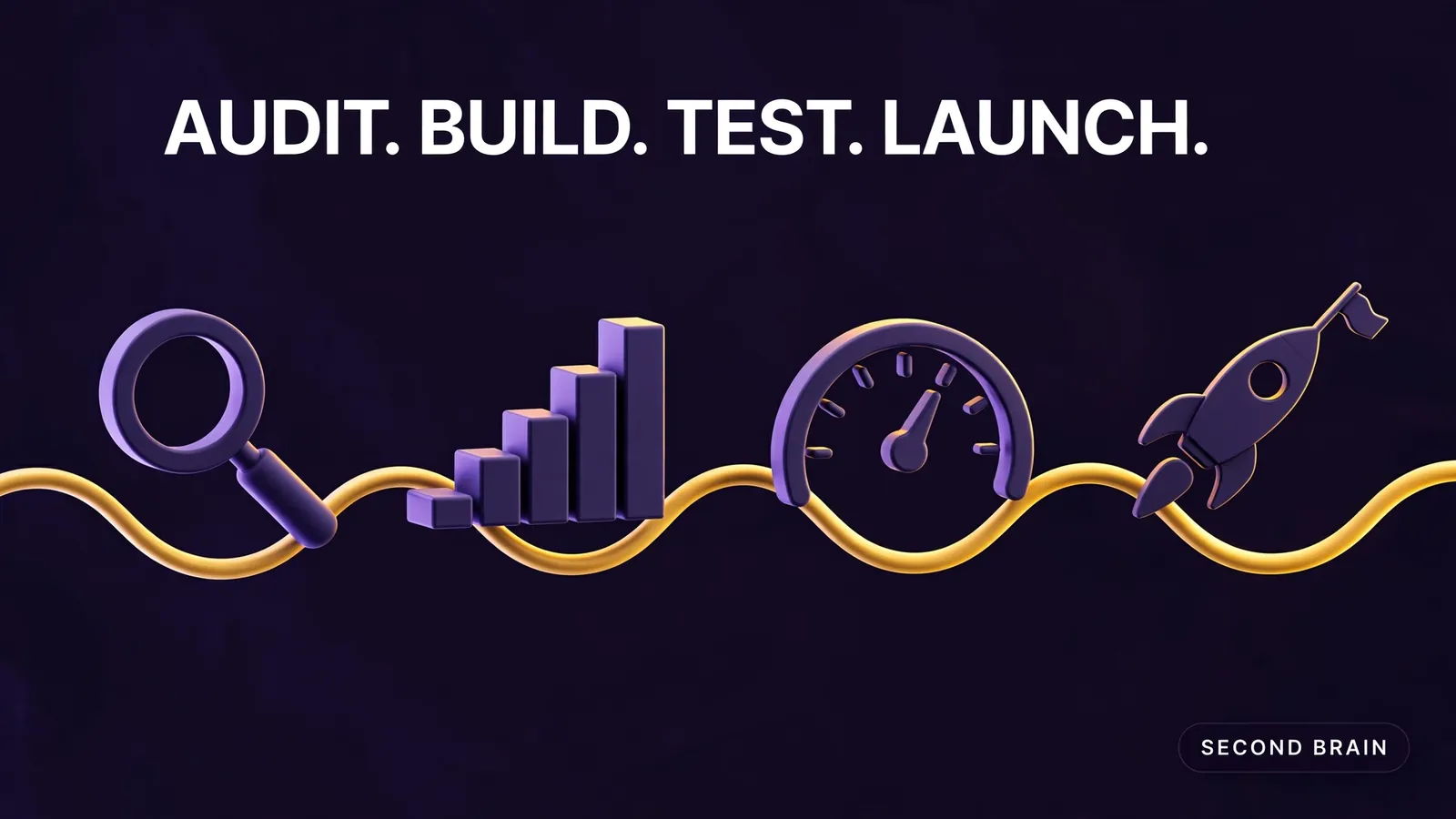
TL;DR: A sound AI implementation for a service business runs in phases, not in one big reveal. First an audit finds where work is lost. Then one system is built and tested against real cases. Then it launches with a human watching exceptions. Then, and only then, the next system is added. Expect the first useful system live in weeks, not months, and expect a review point where the numbers decide whether to expand, fix, or stop. Any provider who cannot describe their weeks this plainly has not run many implementations.
Key Takeaways
- Week one is diagnosis, not building. Anyone who starts building before auditing is guessing with your money.
- One system at a time, tested on real cases before customers see it.
- Launch is a supervised event with an exception owner, not a handover and a goodbye.
- The review meeting, with real numbers, is part of the process, not an optional extra.
- Timelines below describe a typical small engagement as general practice. Your scope may differ, and a provider should say so in writing before work starts.
What happens in the audit phase?
The first phase maps how work actually flows today. That means call logs, inbox response times, open estimate lists, and the calendar, read as records rather than as impressions. The output is a short list of leaks, ranked by value: missed calls that never got a callback, quotes sent and never followed up, reminders that depend on memory.
The audit also sets the baseline. Without a before number, no after number means anything. This is the same discipline behind our AI implementation cost breakdown: scope follows evidence, and the cases where the honest answer is to do less are named at this stage, not after the invoice.
A good audit ends with a decision, in writing: build this system first, for this reason, measured this way. If a provider skips to a demo instead, treat that as your answer about how the rest will go.
What gets built first, and how is it tested?
The first build is deliberately the simplest valuable system, usually lead response: a missed call text back system or fast first reply to web enquiries. Simple is the point. It proves the connections, the data, and the working relationship on something measurable.
Testing uses real cases from your own records: actual missed calls, actual open quotes, actual booking patterns, with names handled properly. The team sending and receiving the test messages should include the staff who will own the system daily, because their objections are the requirements document nobody writes down. Edge cases get named here: landlines that cannot receive texts, customers already in a conversation, out of hours behaviour, and the suppression rules that stop the system annoying the wrong people.
Nothing customer facing launches until the exception path works: where does a confused reply go, who sees it, and how fast.
What does launch week actually involve?
Launch is small on purpose. The system goes live for its real trigger, with a human reviewing every exception for the first period and a daily check of the log: what fired, what converted, what looked wrong. Staff get a short briefing on what changed, what did not, and who to tell when something odd happens.
Expect adjustments in this window. Message wording, timing, and routing all get tuned against live behaviour. A provider who treats launch week tweaks as scope creep is telling you they priced a demo, not an implementation.
By the end of launch, you should be able to answer three questions from records: how many times did it fire, how many bookings or replies did it produce, and what did humans have to rescue. Those answers decide the next phase.
What happens after the first system is live?
Only now does the second system get built, chosen from the audit list: estimate follow-up, reminders, or review requests such as the workflow in our guide to automating Google review requests. The pattern repeats: build, test on real cases, supervised launch, review. Each cycle is faster than the first because the connections and the trust already exist.
This is also where the wider picture gets addressed honestly. Some businesses discover their real bottleneck is not response but capacity, or a process that needs redesigning before any automation helps. A good implementation says so, even when it means a smaller engagement. The full menu of what can be automated, and what should not be, is mapped in our guide to what AI can automate in a service business.
What should you ask any provider before signing?
- What does your audit look at, and what do I receive from it?
- Which system would you build first for a business like mine, and why that one?
- How do you test before launch, and who from my team is involved?
- Who owns exceptions after launch, on your side and on mine?
- What numbers will we review together, and when?
- What would make you advise me to stop or spend less?
The answers matter more than the tool list. Tools change quarterly. A provider whose process has no audit, no test phase, and no review meeting is selling software installation, not implementation, and the difference shows up in your results within a month.
FAQ
How long does a typical implementation take?
For a first system, plan on weeks: an audit, a build and test period, then a supervised launch. Larger scopes phase over a longer period, one system at a time. Treat any exact promise made before an audit as marketing, including ours. The audit is what turns a guess into a schedule.
Do my staff need to be technical?
No. Staff need to be involved, which is different. The people who answer phones and chase quotes know where the process breaks, and their testing time is the most valuable input in the build. Day to day, a well built system asks less of staff, not more: exceptions arrive in one place, with context attached.
What if the first system does not work?
Then the review numbers show it, and the options are fix, narrow, or stop, in that order. This is why phasing matters: a failed first system in a phased engagement is a small, informative loss. The same failure inside a big bang launch is an expensive mess. Contracts should make the review point and the exit clear before work starts.
Can we implement in house instead?
Sometimes, yes. If you have a staff member with time, technical confidence, and ownership of the outcome, a simple system is buildable in house, and our comparison of hiring an SDR versus building systems works through the honest maths of people versus systems. What most businesses lack is not ability but protected time, which is what an engagement actually buys.
Sources
- Process descriptions reflect Second Brain's engagement pattern for service businesses. Timelines are described as typical general practice, not guarantees.