Missed Call Text Back for Plumbers: Stop Donating Emergencies to Competitors
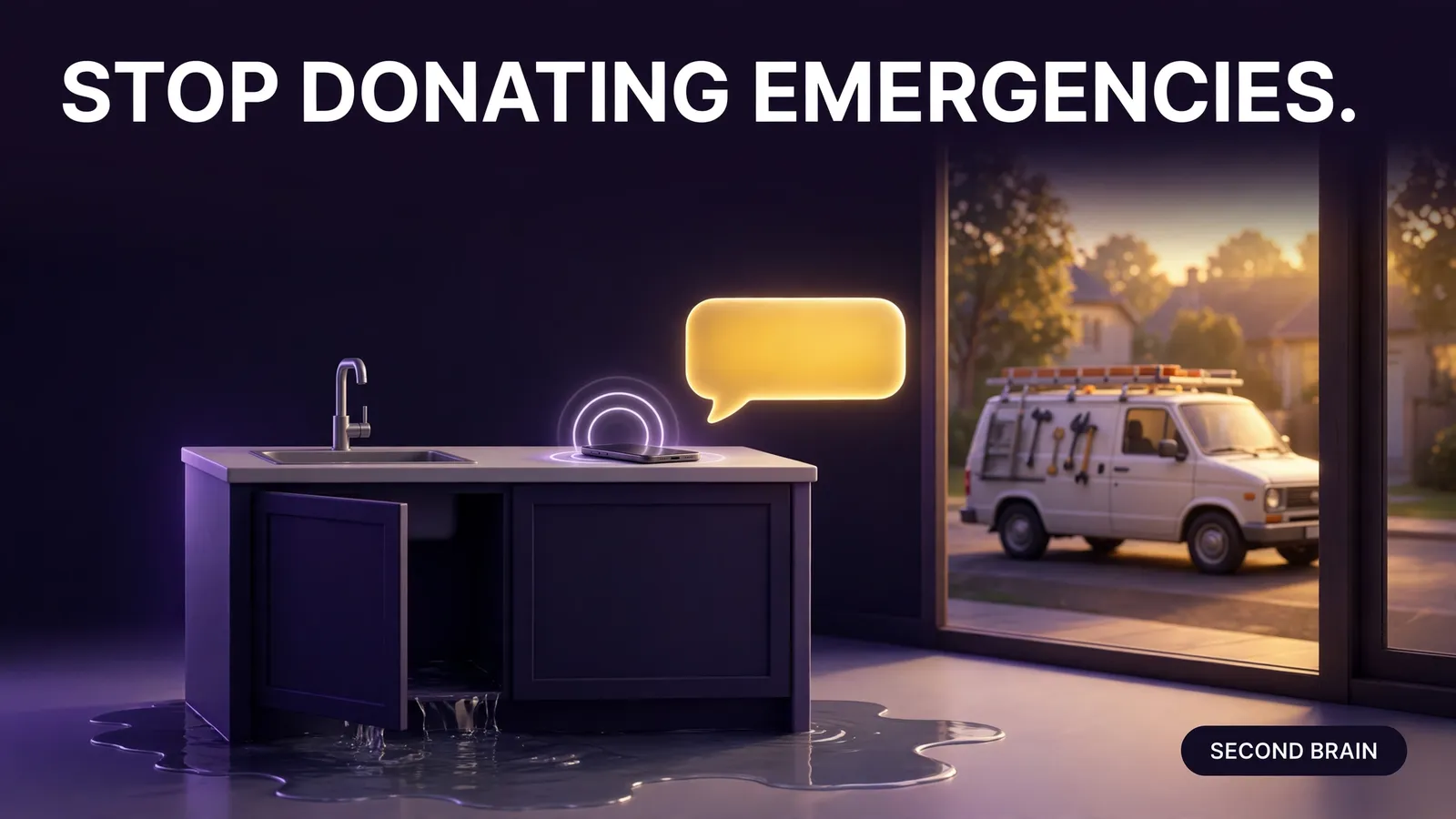
TL;DR: A plumbing customer with water where it should not be calls down the search results until somebody responds. If your phone rings out while the crew is under a house or on another job, a missed call text back system answers for you within seconds: it names your company, acknowledges the problem, asks the triage question that sorts emergency from routine, and holds the conversation until a human joins it. Every missed call, text, and booking is logged, so the owner can finally see what unanswered phones were costing.
Key Takeaways
- Plumbing urgency is extreme and perishable. The window to win the job is measured in minutes.
- The first text does light triage: what is happening, is water still flowing, what area. That sorting speeds the human response too.
- Emergency guidance for active flooding or gas concerns must be a standing line, defined once, never improvised by automation.
- Suppression and ownership rules decide whether the system builds trust or spends it.
- Judge it on jobs recovered per week from your phone records, especially after hours.
Why is plumbing the sharpest case for text back?
Because the caller's situation deteriorates in real time. A burst pipe, a sewage backup, a water heater flooding a garage: each minute of silence from your company is a minute of damage in their home and a reason to dial the next listing. Unlike a quote request, which tolerates an evening callback, an emergency call is a live auction where the first credible response wins almost by default. The core mechanics are identical to the cross trade design in our missed call text back system guide. Plumbing simply raises the stakes per miss and shortens the fuse, which is why plumbers, of all trades, should install it first and argue later.
Run your own audit before believing any of this. Pull last month's call log, count unanswered calls by hour, and mark the after hours block separately. As an illustrative planning exercise only: assign each unanswered in hours call the value of your average emergency job and you will produce a monthly figure that reframes the phone system from an admin detail into your largest single leak. Your numbers will differ. The shape of the discovery rarely does.
How does the plumbing version work?
The trigger is any call ending unanswered. Within seconds the caller receives a text from the business number naming the company and asking the sorting question: what is happening, and is water still running or leaking now. That second clause is the plumbing difference. It routes the reply: active water means the human callback jumps the queue and the standing guidance line, shut off advice per your company's own protocol wording, is already in the thread. Routine matters, a dripping tap, a quote for a remodel, enter the normal response rhythm with expectations set honestly.
Replies are owned by a named person in hours, dispatcher or owner, with the thread, number, and call time in one view. After hours, the text states when a human will respond and repeats the emergency guidance and route, because a system that chats cheerfully at midnight and delivers a human at nine has lied by implication. The record closes the loop: missed call, triage answer, outcome, booked or lost, in the CRM, feeding the estimate follow-up sequence in our plumber estimate follow-up guide for the callers who become quotes.
What are the rules that keep it trustworthy?
Never text a caller already in a live conversation, a supplied number that just completed a call, or known non mobile lines where detection is available. Never let the system diagnose beyond triage questions or quote prices in the thread. Never hide that the first text is automated; homeowners forgive automation instantly and deception never. And keep the send log reviewed weekly in busy periods, because the log is where the one wrong send will appear, and catching your own system's mistake before a customer reports it is the difference between a tool and a liability. The same care standard applies to the answering decision many plumbers weigh alongside this system, compared in our AI receptionist versus answering service analysis: text back first, because it is narrower and provable within a fortnight of call logs.
FAQ
What if the caller is an existing customer with our number saved?
Then the text lands as a message from a company they know, which works even better, provided your suppression rules skip them if they are mid job with a technician on site. Existing customers in genuine emergencies deserve the fastest human callback the log can queue, and the triage answer usually tells you who they are within one reply.
Does this replace our after hours answering arrangement?
It can replace a purely message taking arrangement for many firms, because the text plus triage plus a disciplined morning queue delivers more than a relayed message slip. Firms with real emergency cover keep the human route for active emergencies and let text back carry the routine and the triage. Compare your arrangement honestly against response times recorded, not against the brochure.
How do we stop texts going to landlines and other businesses?
Use the platform's number type detection where available, maintain a suppression list of suppliers, landlords, and regular commercial callers, and review new senders in the weekly log until the patterns settle. Perfection is not available. A reviewed system with a short suppression list beats both silence and carelessness comfortably.
What result should we expect in the first month?
Expect visibility first: a true count of missed calls and their outcomes, which most firms have never had. Recovered bookings follow from the replies your team works promptly. If recovered jobs are low, the log localises the fault, volume, triage wording, or reply ownership, and each has a different fix. That diagnostic honesty is the system's real first month product.
Sources
- This post applies Second Brain's missed call text back playbook to plumbing. The valuation exercise is labelled illustrative planning framing; no statistics are claimed. Emergency guidance wording is left to each company's own protocol.