Plumber Speed to Lead: Response Systems for Emergencies and Quotes
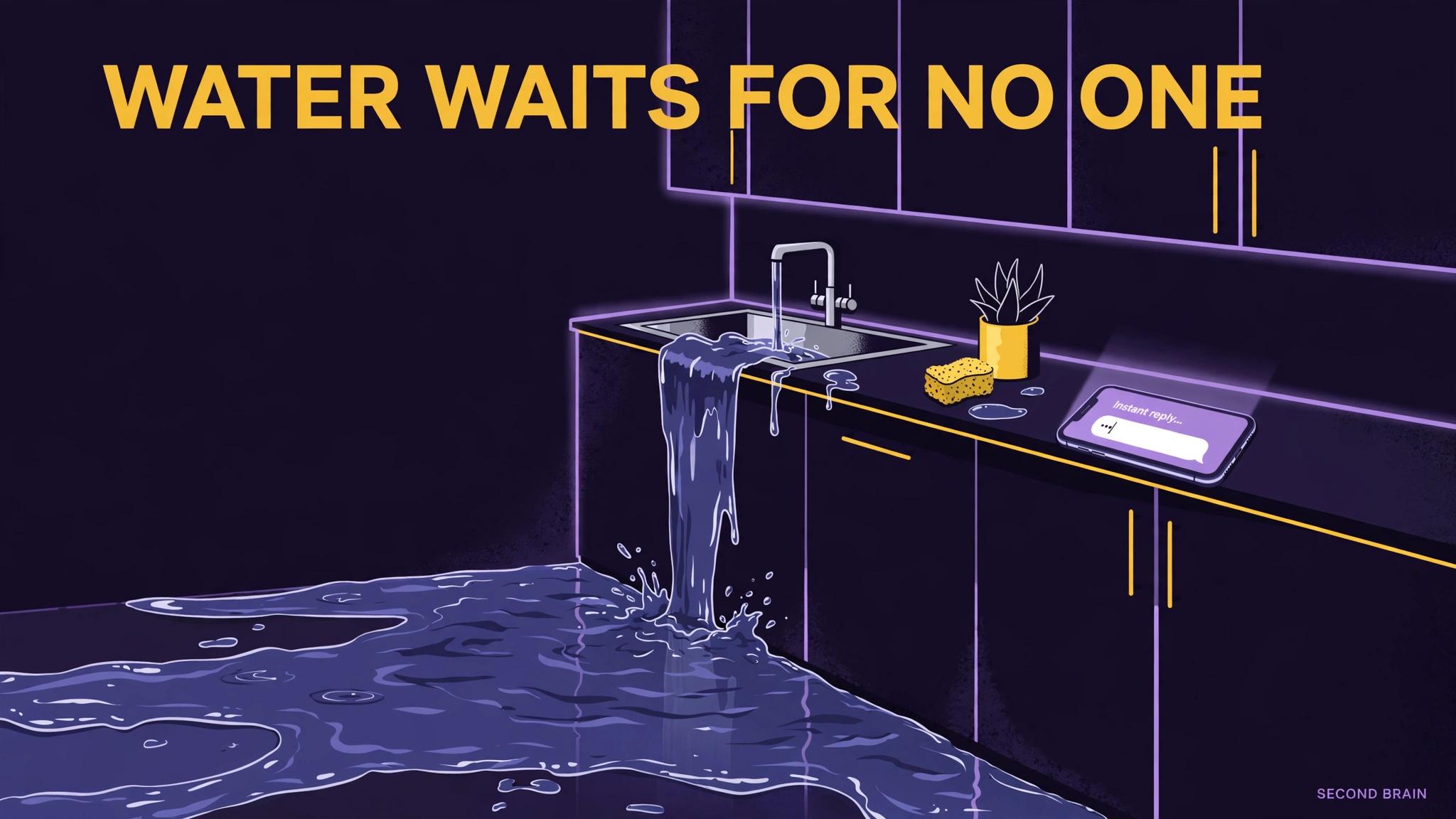
TL;DR: Run plumbing response in two lanes. Emergency enquiries, active leaks, sewage problems, no hot water, need instant acknowledgement, a fast human triage reply, and an honest statement of when help can arrive. Planned enquiries, quotes, refits, and non-urgent repairs, need a prompt structured reply that books an assessment. Give both lanes a named owner, protect the emergency lane when the day fills up, follow up a finite number of times, and measure your own response times rather than relying on benchmark claims.
Key Takeaways
- Plumbing intent is unusually urgent. Delay in the emergency lane does not just lose a lead, it leaves a customer managing damage alone.
- The first reply must do work: triage and a next step for emergencies, questions and a booking step for planned jobs.
- Honest capacity statements retain goodwill. A true wait told early beats a fast promise that slips twice.
- The missed call layer is where emergency response most often fails, so it needs its own safety net.
- This system pairs with the quote discipline in our plumber estimate follow up guide.
What does speed to lead mean for a plumbing company?
It means the time between an enquiry arriving and a response that actually moves the customer forward, measured separately for emergencies and for planned work, because averaging the two hides both problems. A company can look responsive on paper while emergency callers wait behind quote emails, or while quote enquiries are answered instantly and emergencies queue behind whoever is free.
The emergency caller is rarely comparing three plumbers calmly. They are looking for the first credible company that answers, understands the situation, and tells them what happens next, including what to do in the meantime, such as how to shut off water where that advice is safe and appropriate for your team to give. The planned customer is comparing, and your speed competes with the clarity of your process. No response or conversion statistic is claimed in this guide. The useful number is your own: sample recent enquiries in each lane, time the first real replies, and count the enquiries that never received one. That audit is the cheapest way to size the problem before buying anything. The phone layer underneath both lanes is covered in our plumber missed call text back guide.
The emergency lane: acknowledge, triage, tell the truth
Start with instant acknowledgement on every digital channel, and a missed call safety net on the phone. The acknowledgement confirms the enquiry arrived and states when a person will respond. During a day of burst pipes and flooding calls, that message should say so plainly and give a realistic window. Silence during property damage feels like abandonment, and customers describe it in exactly those terms later.
The first human reply is triage. Establish what is happening, whether the water is stopped, whether there is any safety concern that changes the advice, and where the property is. Then give the honest position: the earliest realistic arrival, what to do until then, and what happens if the situation worsens. Never promise an arrival the board cannot deliver to win the job. The short term win becomes a review about being let down during an emergency, and our plumber review response templates guide shows how hard those particular complaints are to answer well after the fact.
End the emergency response with ownership. One dispatcher or owner per shift holds the unanswered queue, sweeps it at set points in the day, and makes a deliberate decision on anything that will wait. Emergencies should never wait by accident.
The planned lane: structure beats raw speed
For quotes, bathroom work, water heater replacements planned in advance, and non-urgent repairs, the first reply should arrive promptly and contain structure: confirm the job as the customer described it, ask the few questions that make a visit or an estimate useful, and offer a real next step with real availability. A reply that arrives in two minutes but only says a team member will be in touch has spent its speed on nothing. The customer still has no action to take, so the comparison with your competitors continues.
Follow up finitely. A quoted job that goes quiet gets a small sequence of helpful touches, each with a reason to exist, and then a polite closure that leaves the door open. That discipline is the subject of our estimate follow up guide linked above. Record outcomes honestly, including the jobs you lost on response time itself. That category is uncomfortable and it is the most instructive one in the report.
Measurement and the weekly habit
Measure weekly, by lane: time to first real reply, enquiries with no reply, follow ups completed as designed, and jobs booked from each lane. Compare with your own previous weeks. If emergency response degrades on busy days, the fix is routing and cover, not telling dispatchers to care more. If planned replies are fast but bookings lag, the reply content is the problem, not the clock.
One warning about measurement theatre. Do not count the automated acknowledgement as the response time in your reporting. It matters to the customer experience, but calling it the response hides the human gap the system exists to close. Track both numbers, labelled for what they are.
Second Brain helps plumbing companies build this as one system: lane design, missed call cover, dispatch ownership, and simple reporting that survives busy days. If your emergency callers are patient and your reviews mention waiting, those two facts are in conflict, and the response data will show you where.
FAQ
How fast should a plumber respond to an emergency enquiry?
Immediately by acknowledgement, and with a human triage reply as the top priority in the queue. Set the standard from your measured baseline and your real staffing, then staff to it on emergency heavy days rather than publishing a promise the board cannot keep.
Should quote enquiries wait while emergencies are handled?
They should be acknowledged instantly and answered within the planned lane standard, with honest timelines on surge days. The two lane design exists so planned work is delayed deliberately and transparently, never silently.
What should the first emergency reply ask?
What is happening, whether the water is stopped, any immediate safety concern, and the property location, followed by the honest arrival position and what to do in the meantime.
How many follow ups should a plumbing quote get?
A small, finite sequence, each adding something useful, then a polite closure. Record the outcome either way so the next review of the system works from facts.
Sources
- Keyword basis: queue candidate "plumber speed to lead" in .saeo/keywords.yaml, added and drafted 2026-10-30. No volume or difficulty figure is claimed in this post.
- Internal link targets: plumber-estimate-follow-up, plumber-missed-call-text-back, plumber-review-response-templates (live, staged, or drafted in this same program, checked 2026-10-30).
- No statistics, response rates, conversion rates, or ranking effects are asserted in this post. Timing standards described are operational choices for a company to set and measure itself.