What a No-Show Really Costs Your Clinic Each Year
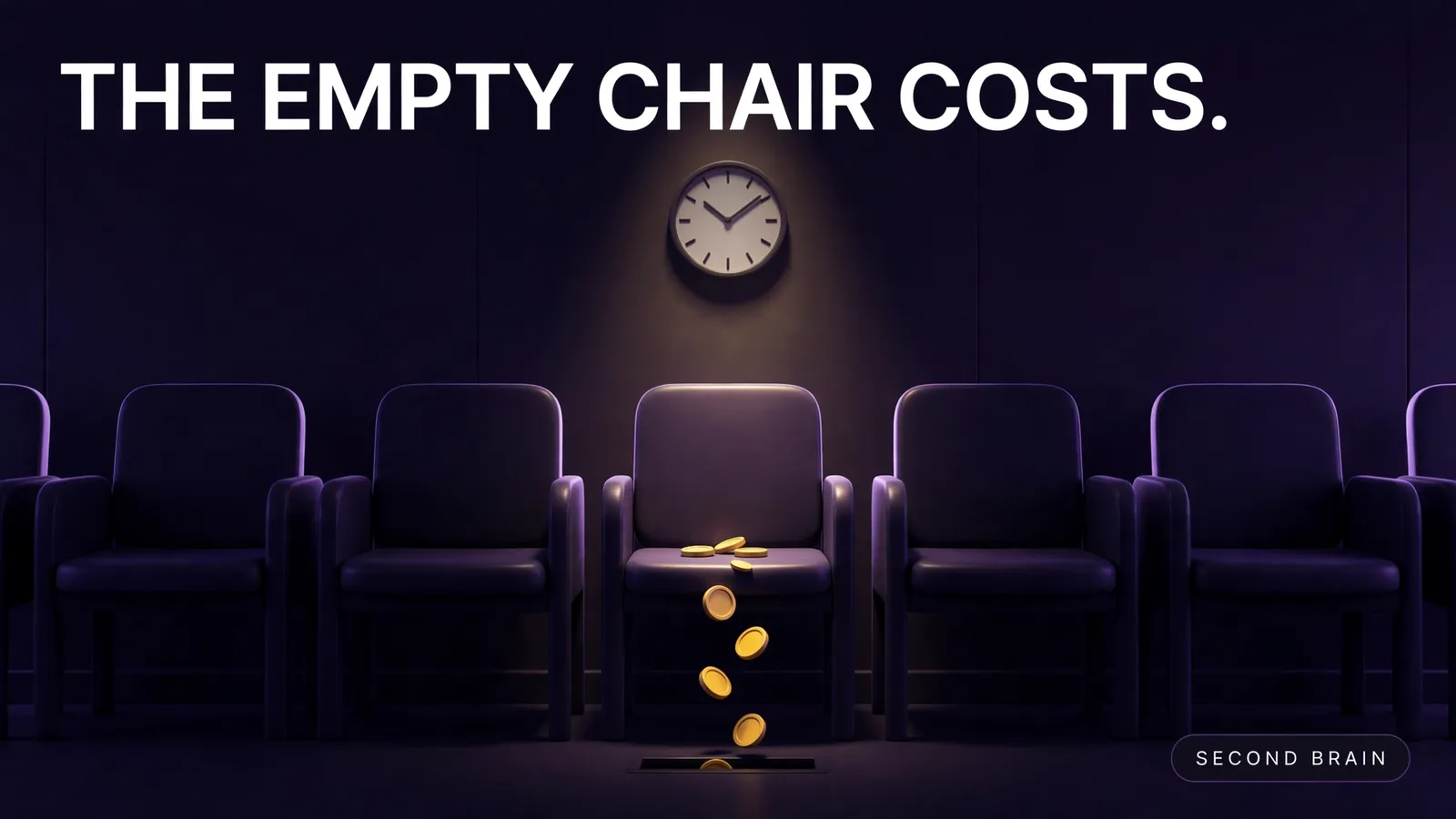
Most clinics have never priced their own no-show rate in dollars. Every empty chair-hour was already paid for once, through rent, practitioner time, and the marketing spend that booked the patient in the first place.
A no-show or late cancellation empties a chair-hour that was already paid for: rent, practitioner time, and the marketing spend it took to book that patient in the first place. Most clinics can state their no-show rate as a percentage but have never converted it into an annual dollar figure, so it never competes for attention against the marketing budget.
How much does one missed appointment actually cost a clinic?
One missed appointment costs the clinic the full value of that visit, plus a share of the fixed cost already spent to make the slot available: rent, practitioner wages for that block, software fees, and whatever it cost in marketing to acquire that patient. None of that is recovered unless the front desk fills the gap before the practitioner is standing in an empty room.
- The visit fee that will not be billed for that slot.
- Rent and utilities for the room during that block, already committed either way.
- The practitioner's wage for that hour, paid by shift or salary either way.
- The marketing cost already spent to acquire that patient, gone regardless.
How do you turn your no-show rate into an annual dollar figure?
Multiply the no-shows and late cancellations you see in an average week by your average revenue per visit, then multiply by fifty-two. That single number is what your current booking pattern already costs every year, before another dollar is spent on advertising meant to replace it.
As a placeholder only, not a claim about any real clinic: forty visits a day, one in ten going unfilled, at a hundred dollars a visit, comes to four empty slots and just over one hundred thousand dollars a year. Put in your own rate and visit value, and the figure becomes real.
Why does a published no-show rate not tell you much about your own clinic?
Published non-attendance rates in the peer-reviewed literature range from about 5 percent to over 30 percent of appointments, depending on setting, patient population, and how far ahead the visit was booked. That research comes mostly from hospital and primary-care clinics, not private allied health practices, which is exactly why an industry-wide number cannot substitute for measuring your own clinic's actual rate.
A 2026 systematic review of twenty seven studies and over thirteen million appointments found two patterns worth acting on:
- Risk rises with the gap between booking and the visit, confirmed in a large scheduling study.
- Prior non-attendance predicts future non-attendance, so a small share of patients often accounts for most empty chairs.
Why is recovering this capacity cheaper than buying more leads?
A new patient from a marketing campaign costs money before they sit in a chair: ad spend, content, and front-desk time to convert the enquiry. A patient who already booked and did not show has already been acquired once. Filling that slot again costs a reminder message, not another marketing dollar.
This argument runs against a marketing consultancy's own interest, which is part of why it holds up. Recovering a slot already paid for is close to pure margin. Buying a new patient to fill a different slot means paying acquisition cost again, for demand that was already on the books. We have made a related point about paid visibility: ranking well does not guarantee you capture the demand it creates. A clinic also has to be named before it can be chosen: dental and allied-health clinics are two of the verticals in our audit of what ChatGPT recommends, which checks what the engine claims about businesses like yours. More on how Second Brain works explains why we treat the leak as the first job.
What actually reduces no-shows and late cancellations?
Automated reminders that state the appointment clearly and offer an easy way to cancel or reschedule are the best-studied fix, and trials show they work at a fraction of the cost of staff phone calls. Waitlists and shorter booking windows for high-risk visits cover most of the rest.
- One randomized trial found text and phone reminders produced a similar missed-appointment rate (11.7 versus 10.2 percent), but text cost about 230 euros against close to 9,000 in phone-call staff time.
- A separate pair of trials found that stating the appointment's cost in the reminder text lowered the missed-appointment rate further, from about 11 percent to about 8 percent.
- A waitlist that texts the next patient when a slot opens turns an empty chair back into revenue, and a shorter booking window for high-risk visits helps too.
Ask a practice manager what a slow Tuesday afternoon looks like now.
This is the same lens behind our work with allied health clinics: fix what is already paid for before spending more to acquire it again.
Key Takeaways
- A no-show or late cancellation wastes a chair-hour already paid for through rent, staff time, and the marketing spend used to book that patient.
- Multiplying weekly no-shows and late cancellations by your average visit value and by fifty-two turns a vague complaint into a specific annual number.
- Peer-reviewed non-attendance research spans roughly 5 to over 30 percent of appointments depending on setting, so your own rate has to be measured, not assumed.
- Recovering capacity you already paid for is closer to pure margin than buying a new patient through advertising.
FAQ
Does reducing no-shows improve patient outcomes?
No such claim is made here. Filling a chair that would otherwise sit empty is a scheduling and revenue question, not a treatment question, and any patient's care remains a clinical matter for their practitioner.
Is charging a fee for missed appointments a good idea?
This is a business policy decision, weighed against patient relationships, local norms, and payer rules. Know what a missed slot costs before deciding how hard to guard against it.
Which practice-management platforms handle automated reminders?
Jane App and Cliniko, the two platforms most common among clinics we work with, both include configurable reminders and waitlist features. Whether those settings are turned on and used well is a separate question, usually configuration and follow-through rather than new software spend.
How do you find your clinic's real no-show rate if your software does not report it cleanly?
Most practice-management platforms log appointment status, so the raw data usually exists even when the dashboard does not summarize it well. Export a month of records, count no-shows and late cancellations separately from clinician-initiated cancellations, and divide by total booked slots; if the export itself is unusable, fix that first.
Where does the research behind these numbers come from?
Every figure above is attributed to the peer-reviewed study or trial that produced it, linked in Sources below, not to a scheduling-software vendor's blog. Our approach to sourcing and correcting claims is documented in our editorial policy.
Sources
- Global Predictors of Appointment Non-Adherence in Primary Care Settings: A Systematic Review, Healthcare (2026)
- Rate and predictors for non-attendance of patients undergoing hospital outpatient treatment for chronic diseases: a register-based cohort study, BMC Health Services Research (2019)
- Text-messaging versus telephone reminders to reduce missed appointments in an academic primary care clinic: a randomized controlled trial, BMC Health Services Research (2013)
- Stating appointment costs in SMS reminders reduces missed hospital appointments: findings from two randomised controlled trials, PLOS ONE (2015)
- Large-scale no-show patterns and distributions for clinic operational research, Healthcare (2016)